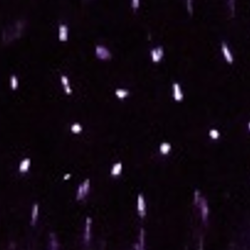
DBD in burst mode : solution for more efficient CO2 conversion ?
– Authors : A. Ozkan, T. Dufour*, T. Silva, N. Britun, R. Snyders, F. Reniers, A. Bogaerts
– References : Plasma Sources Science & Technology, 2016, Vol. 25, No 5, 055005
– Links : DOI, HAL (free download)
Abstract
CO2 conversion into value-added products has gained significant interest over the few last years, as the greenhouse gas concentrations constantly increase due to anthropogenic activities. Here we report on experiments for CO2 conversion by means of a cold atmospheric plasma using a cylindrical flowing dielectric barrier discharge (DBD) reactor. A detailed comparison of this DBD ignited in a so-called burst mode (i.e. where an AC voltage is applied during a limited amount of time) and pure AC mode is carried out to evaluate their effect on the conversion of CO2 as well as on the energy efficiency. Decreasing the duty cycle in the burst mode from 100% (i.e. corresponding to pure AC mode) to 40% leads to a rise in the conversion from 16–26% and to a rise in the energy efficiency from 15 to 23%. Based on a detailed electrical analysis, we show that the conversion correlates with the features of the microfilaments. Moreover, the root-mean-square voltage in the burst mode remains constant as a function of the process time for the duty cycles <70%, while a higher duty cycle or the usual pure AC mode leads to a clear voltage decay by more than 500 V, over approximately 90 s, before reaching a steady state regime. The higher plasma voltage in the burst mode yields a higher electric field. This causes the increasing the electron energy, and therefore their involvement in the CO2 dissociation process, which is an additional explanation for the higher CO2 conversion and energy efficiency in the burst mode.

How do the barrier thickness and dielectric material influence the filamentary mode and CO2 conversion in a flowing DBD ?
– Authors : A. Ozkan, T. Dufour*, A. Bogaerts, F. Reniers
– References : Plasma Sources Science & Technology, 2016, Vol. 25, No 4, 045016
– Links : DOI, HAL (free download)
Abstract
Dielectric barrier discharges (DBDs) are commonly used to generate cold plasmas at atmospheric pressure. Whatever their configuration (tubular or planar), the presence of a dielectric barrier is mandatory to prevent too much charge build up in the plasma and the formation of a thermal arc. In this article, the role of the barrier thickness (2.0, 2.4 and 2.8 mm) and of the kind of dielectric material (alumina, mullite, Pyrex, quartz) is investigated on the filamentary behavior in the plasma and on the CO2 conversion in a tubular flowing DBD, by means of mass spectrometry measurements correlated with electrical characterization and IR imaging. Increasing the barrier thickness decreases the capacitance, while preserving the electrical charge. As a result, the voltage over the dielectric increases and a larger number of microdischarges is generated, which enhances the CO2 conversion. Furthermore, changing the dielectric material of the barrier, while keeping the same geometry and dimensions, also affects the CO2 conversion. The highest CO2 conversion and energy efficiency are obtained for quartz and alumina, thus not following the trend of the relative permittivity. From the electrical characterization, we clearly demonstrate that the most important parameters are the somewhat higher effective plasma voltage (yielding a somewhat higher electric field and electron energy in the plasma) for quartz, as well as the higher plasma current (and thus larger electron density) and the larger number of microdischarge filaments (mainly for alumina, but also for quartz). The latter could be correlated to the higher surface roughness for alumina and to the higher voltage over the dielectric for quartz.
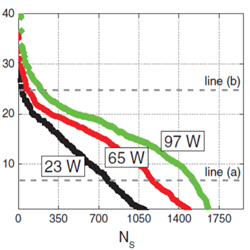
The influence of power and frequency on the filamentary behavior of a flowing DBD – Application to the splitting of CO2
– Authors : A. Ozkan, T. Dufour, T. Silva, N. Britun, R. Snyders, A. Bogaerts, F. Reniers
– References : Plasma Sources Science & Technology, 2016, Vol. 25, No 2, 025013
– Links : DOI, HAL (free download)
Abstract
In this experimental study, a flowing dielectric barrier discharge operating at atmospheric pressure is used for the splitting of CO2 into O2 and CO. The influence of the applied frequency and plasma power on the microdischarge properties is investigated to understand their role on the CO2 conversion. Electrical measurements are carried out to explain the conversion trends and to characterize the microdischarges through their number, their lifetime, their intensity and the induced electrical charge. Their influence on the gas and electrode temperatures is also evidenced through optical emission spectroscopy and infrared imaging. It is shown that, in our configuration, the conversion depends mostly on the charge delivered in the plasma and not on the effective plasma voltage when the applied power is modified. Similarly, at constant total current, a better conversion is observed at low frequencies, where a less filamentary discharge regime with a higher effective plasma voltage than that at a higher frequency is obtained.
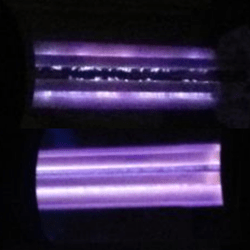
CO2-CH4 conversion and syngas formation at atmospheric pressure using a multi-electrode dielectric barrier discharge
– Authors : A. Ozkan, T. Dufour, G. Arnoult, P. de Keyzer, A. Bogaerts, F. Reniers
– References : Journal of CO2 utilization, 2015, Vol. 9, 74-81
– Links : DOI, HAL (free download)
Abstract
The conversion of CO2 and CH4 into value-added chemicals is studied in a new geometry of a dielectric barrier discharge (DBD) with multi-electrodes, dedicated to the treatment of high gas flow rates. Gas chromatography is used to define the CO2 and CH4 conversion as well as the yields of the products of decomposition (CO, O2 and H2) and of recombination (C2H4, C2H6 and CH2O). The influence of three parameters is investigated on the conversion: the CO2 and CH4 flow rates, the plasma power and the nature of the carrier gas (argon or helium). The energy efficiency of the CO2 conversion is estimated and compared with those of similar atmospheric plasma sources. Our DBD reactor shows a good compromise between a good energy efficiency and the treatment of a large CO2 flow rate.
 Thierry Dufour, Dr. - Academic research