
Targeting cholangiocarcinoma cells by cold piezoelectric plasmas : in vitro efficacy and cellular mechanisms
– Authors : M. Soulier, B. Lekbaby, I. Houari, H. Decauchy, A. Pavy, A. Coumes, R. Morichon, T. Dufour, L. Fouassier
– References : Scientific Reports, 14:30178 (2024)
– Links : DOI, HAL (free download)
Abstract
Cold piezoelectric plasma (CPP) is a novel approach in cancer therapy, enabling the development of portable treatment devices capable of triggering cancer cell death. While its effectiveness remains underexplored, this research focuses on its application against cholangiocarcinoma (CCA), an aggressive cancer of the biliary tract. A CPP device is utilized to generate either a corona discharge (Pz-CD) or a dielectric barrier discharge (Pz-DBD) for in vitro experiments. Notably, Pz-CD can deliver more power than Pz-DBD, although both sources produce significant levels of reactive species in plasma and liquid phases. This work shows that CPP causes a gradient increase in medium temperature from the center towards the edges of the culture well, especially for longer treatment times. Although Pz-CD heats more significantly, it cools quickly after plasma extinction. When applied to human CCA cells, CPP shows immediate and long-term effects, more localized for Pz-CD, while more uniform for Pz-DBD. Immediate effects result also in actin cytoskeleton remodeling without alteration of the cell membrane permeability. Long-term effects of CPP, although the antioxidant system is engaged, include activation of the DNA damage response pathway leading to cell death. In conclusion, CPP should be recognized as a promising antitumor therapy.

Advancements in maize cultivation : synergistic effects of dry atmospheric plasma combined with plasma-activated water
– Authors : J.-P. Kamseu-Mogo, M. Soulier, G. Kamgang-Youbi, H. N. Apala Mafouasson, T. Dufour
– References : J. Phys. D : Appl. Phys. 58, 055201, 17 pp (2025)
– Links : DOI, Free download
Abstract
In this study, we investigate the effects of pre-germinative and post-germinative plasma treatments, applied separately or in combination, to improve maize germination and early seedling development. Pre-germinative treatment consists of priming the seeds with a dry atmospheric plasma (DAP) generated by a dielectric barrier device (DBD), characterized by minimal radiative emission, low electrical power (4 W) and high emissions of O, OH and NO radicals. Post-germinative treatment, known as plasma-activated water (PAW), uses a single-pin electrode device (SPED) to generate a DC discharge that features a power of 126 W and produces large amounts of OH radicals. The resulting PAW, after 5 minutes of SPED treatment, induces a slight acidification and increased concentrations of nitrate ions (from 24 to 250 mg/L), nitrite ions (from less than 0.1 to 56.1 mg/L) and hydrogen peroxide (from 0.3 to 18.5 mg/L). Results indicate that DAP applied on maize seeds for 20 min boosts their germination rate up to 90% (versus only 65% for untreated seeds) while reducing the median germination time by 37.5%. Then, seedling growth monitoring is achieved on control, DAP, PAW and DAP+PAW groups to assess stem length, hypocotyl length, leaf count, collar diameter and fresh/dry mass. The DAP+PAW group shows the most robust growth, demonstrating a synergistic effect of the combined treatments, particularly with significantly longer stem lengths. Additionally, physiological analyses of seedling leaves indicate a decrease in chlorophyll content despite enhanced growth, while fluorescence microscopy reveals a reduction in stomatal density in leaves treated with DAP and PAW, especially in the combined treatment group, potentially impacting photosynthetic efficiency and water regulation.
Treatment of seeds by cold ambient air plasma : Combining impedance measurements with water sorption modeling to understand the impact of seed hydration
– Authors : J. August, C. Bailly, T. Dufour
– References : Journal of Physics D : Applied Physics. Vol. 57, No 26 (2024)
– Links : DOI, Free download
Abstract
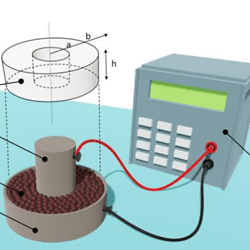
In this article, we focus on the plasma seed interaction and more specifically-on the feedback exerted by the seeds on the plasma properties. Dormant Arabidopsis seeds with different water contents (WC), namely 3 %DW, 10 %DW and 30%DW were exposed to cold ambient air plasma (C2AP) generated in a dielectric barrier device (DBD). It is found that increasing WC enhances the capacitive current of the DBD, generates a greater number of low energy streamers (characterized by current peaks lower than 10 mA) that preferentially interplay with the seeds. Since the resistive and capacitive components of the seeds modify the C2AP electrical properties, impedance measurements (also called LCRmetry) have been carried out to measure their main dielectric parameters before/after plasma exposure (seeds resistance, capacitance, complex relative permittivity, tangent loss and conductivity). It appears that WC significantly changes dielectric losses at low frequencies (< 1 kHz) due to polarization relaxation of the polar molecules (i.e. water). LCRmetry further reveals that C2AP does not substantially alter seeds dielectric parameters, i.e. it neither adds or removes significant amounts of new materials, meaning that the relative starch, protein and lipid contents remain essentially unaffected. However, it cannot be discounted that some bulk properties of the Arabidopsis seeds may be modified, especially regarding their porosity. This characteristic could facilitate penetration of plasma-generated reactive oxygen species into the internal seed tissues, leading to the grafting of oxygenated groups. To corroborate this theory, water sorption isotherms have been achieved on Arabidopsis seeds and fitted with four thermodynamic models, including the Brunauer-Emmett-Teller model and the Generalized D’Arcy and Watt model. It is demonstrated that C2AP primarily strengthens water-seed affinity by modifying molecular interactions rather than changing the seed’s moisture layer. This occurs despite a potential decrease in the number of adsorption sites, indicating a significant increase in overall seed hydrophilicity after plasma treatment.
Cold plasma treatment boosts barley germination and seedling vigor : Insights into soluble sugar, starch, and protein modifications
– Authors : M. A. Benabderrahim, I. Bettaieb, H. Hannachi, M. Rejili, T. Dufour
– References : Journal of Cereal Science, Vol. 116, 103852 (2024)
– Links : DOI, Free download
Abstract
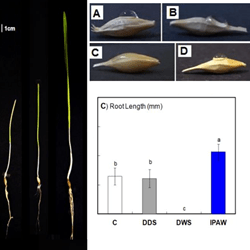
This study investigates the impact of three cold plasma treatments on barley seed germination: direct treatment of dry seeds (DDS), direct treatment of water-soaked seeds (DWS), and indirect treatment of seeds using plasma-activated water (IPAW). Our findings reveal that while DDS maintained the seed’s imbibition structures, DWS significantly reduced water uptake. Notably, DWS-treated seeds exhibited a substantial increase in moisture content, potentially leading to an oxygen-deficient environment within the seed. This condition appeared to hinder germination, contrasting with the beneficial effects observed in DDS-treated seeds. Analyses of surface hydrophilicity, phenolic compounds, carbohydrate composition, protein storage and seedling growth were conducted. Interestingly, cold plasma treatment enhanced seed surface hydrophilicity, as evidenced by a decrease in water contact angles, particularly for DWS. We observed specific reductions in flavonoids and total phenolics, alongside shifts in carbohydrate composition, including increased sugar content up to 15.1% (DDS) and 13.5% (DWS), accompanied by a decrease in starch content to 189.00 ± 7.86 mg/g FM for DWS. Protein storage assessments revealed declines in albumin, globulin and prolamin fractions post-CP exposure. Finally, DDS and IPAW treatments markedly improved seedling shoot growth (from two to three-fold), underscoring the potential of these treatments in enhancing barley germination.
From basics to frontiers : a comprehensive review of plasma-modified and plasma-synthesized polymer films
– Authors : T. Dufour
– References : Polymers, Vol. 15, Issue 17, 3607, 54 pages (2023)
– Links : DOI, Free download
Abstract
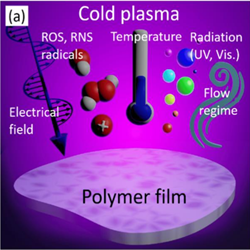
This comprehensive review begins by tracing the historical development and progress of cold plasma technology as an innovative approach to polymer engineering. The study emphasizes the versatility of cold plasma derived from a variety of sources including low-pressure glow discharges (e.g., radiofrequency capacitively coupled plasmas) and atmospheric pressure plasmas (e.g., dielectric barrier devices, piezoelectric plasmas). It critically examines key operational parameters such as reduced electric field, pressure, discharge type, gas type and flow rate, substrate temperature, gap, and how these variables affect the properties of the synthesized or modified polymers. This review also discusses the application of cold plasma in polymer surface modification, underscoring how changes in surface properties (e.g., wettability, adhesion, biocompatibility) can be achieved by controlling various surface processes (etching, roughening, crosslinking, functionalization, crystallinity). A detailed examination of Plasma-Enhanced Chemical Vapor Deposition (PECVD) reveals its efficacy in producing thin polymeric films from an array of precursors. Yasuda’s models, Rapid Step-Growth Polymerization (RSGP) and Competitive Ablation Polymerization (CAP), are explained as fundamental mechanisms underpinning plasma-assisted deposition and polymerization processes. Then, the wide array of applications of cold plasma technology is explored, from the biomedical field, where it is used in creating smart drug delivery systems and biodegradable polymer implants, to its role in enhancing the performance of membrane-based filtration systems crucial for water purification, gas separation, and energy production. It investigates the potential for improving the properties of bioplastics and the exciting prospects for developing self-healing materials using this technology.
Release of Arabidopsis seed dormancy by cold atmospheric plasma relies on cytoplasmic glass transition
– Authors : J. August, T. Dufour, C. Bailly
– References : J. Phys. D : Appl. Phys., Vol. 56, No. 41,415202 (2023)
– Links : DOI, Free download
Abstract
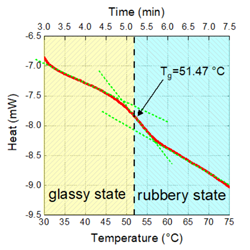
When mature Arabidopsis thaliana seeds are dormant, their germination is prevented in apparently favourable conditions. This primary dormancy can be released during seed dry storage through a process called after-ripening whose duration can last several months. To reduce this delay, cold atmospheric plasmas (CAP) can be used as sources of reactive oxygen species capable of inducing heterogeneous chemical reactions. While CAP are known to stimulate the germination of various seed species, the relationship between CAP treatments and the amorphous solid state of dry seeds remains unexplored. Here, we demonstrate that seed dormancy can be alleviated using a cold plasma of ambient air and that this alleviation can be amplified for seeds with high water-content (typically 30 %DW) or seeds heated at 60 °C during plasma treatment. Differential scanning micro-calorimetry shows that these characteristics control the glassy/rubbery state of the seed cytoplasm. This technique indicates also that a glass transition to the rubbery state strengthens the CAP effects to alleviate seed dormancy. We propose that lower cytoplasmic viscosity can promote the oxidative signaling induced by CAP which, in turn, improves the germination process

Les plasmas froids et le Vivant, de nouvelles avancées
– Authors : C. Douat, J. Santos Sousa, T. Dufour
– References : Reflets de la Physique, Vol. 75, pp. 24-30 (2023)
– Links : DOI, Free download
Abstract
Depuis le début des années 2000, des avancées technologiques majeures ont permis l’émergence de plasmas froids à pression atmosphérique ayant de faibles valeurs de courant et des températures proches de la température ambiante. Dans cet article, nous exposons dans un premier temps les principales sources de plasma froid utilisées avec succès dans les applications biomédicales, en insistant notamment sur les propriétés physico-chimiques recherchées. Dans un second temps, nous proposons un état de l’art des dernières avancées médicales (en particulier en cancérologie et en dermatologie), ainsi qu’en agriculture.
From repeatability to self-organization of guided streamers propagating in a jet of cold plasma
– Authors : H. Decauchy, T. Dufour
– References : MDPI, Plasma, Vol. 6, pp. 250-276 (2023)
– Links : DOI, Free download
Abstract
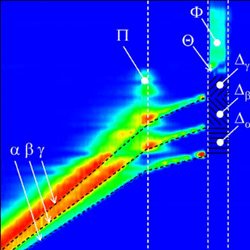
In this work, a jet of cold plasma is generated in a device supplied in helium and powered with a high-voltage nanopulse power supply, hence generating guided streamers. We focus on the interaction between these guided streamers and two targets placed in a series: a metal mesh target (MM) at floating potential followed by a metal plate target (MP) grounded by a 1500 Ω resistor. We demonstrate that such an experimental setup allows to shift from a physics of streamer repeatability to a physics of streamer self-organization, i.e., from the repetition of guided streamers that exhibit fixed spatiotemporal constants to the emergence of self-organized guided streamers, each of which is generated on the rising edge of a high-voltage pulse. Up to five positive guided streamers can be self-organized one after the other, all distinct in space and time. While self-organization occurs in the capillary and up to the MM target, we also demonstrate the existence of transient emissive phenomena in the inter-target region, especially a filamentary discharge whose generation is directly correlated with complexity order Ω. The mechanisms of the self-organized guided streamers are deciphered by correlating their optical and electrical properties measured by fast ICCD camera and current-voltage probes, respectively. For the sake of clarity, special attention is paid to the case where three self-organized guided streamers (α, β and γ) propagate at vα = 75.7 km·s–1, vβ = 66.5 km·s–1 and vγ = 58.2 km·s–1), before being accelerated in the vicinity of the MM target.
Molecular acclimation of halobacterium salinarum to halite brine inclusions
– Authors : C. Favreau, A. Tribondeau, M. Marugan, F. Guyot, B. M. Alpha-Bazin, M. Arul, R. Puppo, T. Dufour, A. Huguet, S. Zirah, A. Kish
– References : Front. Microbiol., 13:1075274 (2023)
– Links : DOI, Free download
Abstract
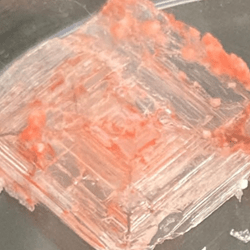
Halophilic microorganisms have long been known to survive within the brine inclusions of salt crystals, as evidenced by the change in color for salt crystals containing pigmented halophiles. However, the molecular mechanisms allowing this survival has remained an open question for decades. While protocols for the surface sterilization of halite (NaCl) have enabled isolation of cells and DNA from within halite brine inclusions, “-omics” based approaches have faced two main technical challenges: (1) removal of all contaminating organic biomolecules (including proteins) from halite surfaces, and (2) performing selective biomolecule extractions directly from cells contained within halite brine inclusions with sufficient speed to avoid modifications in gene expression during extraction. In this study, we tested different methods to resolve these two technical challenges. Following this method development, we then applied the optimized methods to perform the first examination of the early acclimation of a model haloarchaeon (Halobacterium salinarum NRC-1) to halite brine inclusions. Examinations of the proteome of Halobacterium cells two months post-evaporation revealed a high degree of similarity with stationary phase liquid cultures, but with a sharp down-regulation of ribosomal proteins. While proteins for central metabolism were part of the shared proteome between liquid cultures and halite brine inclusions, proteins involved in cell mobility (archaellum, gas vesicles) were either absent or less abundant in halite samples. Proteins unique to cells within brine inclusions included transporters, suggesting modified interactions between cells and the surrounding brine inclusion microenvironment. The methods and hypotheses presented here enable future studies of the survival of halophiles in both culture model and natural halite systems.

Transmission and multiple reflection mechanisms of guided streamers propagating through grounded annular electrode and interacting with grounded surface electrode
– Authors : H. Decauchy, T. Dufour
– References : Plasma Sources Science and Technology, Vol. 31, No. 11 (2022)
– Links : DOI, HAL (free download)
Abstract
The repeatable dynamics and the reversal propagation of guided streamers remains a major question of fundamental physics. In this article, trains of positive guided streamers are generated within an atmospheric pressure plasma jet supplied in helium and polarized by a high-voltage nanosecond pulse generator. The device is completed by two distant targets: a grounded annular electrode coaxially centered around the capillary through which guided streamers can propagate, and a grounded surface electrode on which they can interact. The resulting transmitted and multiple reflected guided streamers are measured combining optical characterization (fast ICCD imaging) and electrical characterization (high voltage probe and current monitors). While the electrical approach provides information on the capacitive/conductive nature of the current peaks as well as on their positive/negative value, fast ICCD imaging distinguishes whether the guided streamers are incident, reflected or transmitted. Combining these two techniques allow us to demonstrate experimentally that the reflected streamers are negative contrarily to the others. Besides, 4 types of reflections have been highlighted: a reflection (r) at the outlet of the capillary, a reflection on the grounded surface electrode (R) and two reflections (r’ and r”) observed when an incident guided streamer passes through the grounded annular electrode. The two techniques agree that the characteristic propagation times are always shorter for reflected negative streamers than for the positive ones propagating forward. Hence, for a grounded annular electrode placed 3 cm away from the high voltage electrode, propagation time is 80 ns for reflection versus 250 ns for transmission. These characteristic propagation times are even shorter when the annular electrode is brought closer to the surface electrode with velocities typically higher than 300 km/s. In addition, the intensity ratios of reflected/incident guided currents drop sharply, typically losing one decade over a counter-propagation length of only 3-5 cm. Finally, all these experimental data are utilized to build an equivalent electrical model that allow to better understand the dynamics of the guided streamers and explain their transmission and reflection modes upon their interaction with the two distant grounded electrodes.
Cyto- and bio-compatibility assessment of plasma-treated polyvinylidene fluoride scaffolds for cardiac tissue engineering
– Authors : M. Kitsara, G. Revet, J.-S. Vartanian-Grimaldi, A. Simon, M. Minguy, A. Miche, V. Humblot, T. Dufour, O. Agbulut
– References : Front. Bioeng. Biotechnol., Vol. 4, pp. 18 (2022)
– Links : DOI, HAL (free download)
Abstract
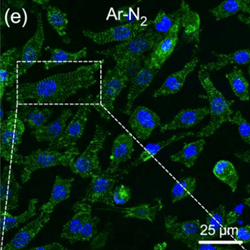
As part of applications dealing with cardiovascular tissue engineering, drop-cast polyvinylidene fluoride (PVDF) scaffolds have been treated by cold plasma to enhance their adherence to cardiac cells. The scaffolds were treated in a dielectric barrier device where cold plasma was generated in a gaseous environment combining a carrier gas (helium or argon) with/without a reactive gas (molecular nitrogen). We show that an Ar-N2 plasma treatment of 10 min results in significant hydrophilization of the scaffolds, with contact angles as low as 52.4° instead of 132.2° for native PVDF scaffolds. Correlation between optical emission spectroscopy and X-ray photoelectron spectroscopy shows that OH radicals from the plasma phase can functionalize the surface scaffolds, resulting in improved wettability. For all plasma-treated PVDF scaffolds, the adhesion and maturation of primary cardiomyocytes is increased, showing a well-organized sarcomeric structure (α-actinin immunostaining). The efficacy of plasma treatment was also supported by real-time PCR analysis to demonstrate an increased expression of the genes related to adhesion and cardiomyocyte function. Finally, the biocompatibility of the PVDF scaffolds was studied in a cardiac environment, after implantation of acellular scaffolds on the surface of the heart of healthy mice. Seven and 28 days after implantation, no exuberant fibrosis and no multinucleated giant cells were visible in the grafted area, hence demonstrating the absence of foreign body reaction and the biocompatibility of these scaffolds.

Cold plasma endoscopy applied to biliary ducts : feasibility risk assessment on human-like and porcine models for the treatment of cholangiocarcinoma
– Authors : H. Decauchy, A. Pavy, M. Camus, L. Fouassier, T. Dufour
– References : J. Phys. D : Appl. Phys., Vol. 55, No. 45, 455401, 23pp (2022)
– Links : DOI, HAL (free download)
Abstract
For the past twelve years, cold plasmas (i.e., weakly ionized gas) have been positioned as a breakthrough technology for treating cancer thanks to their antitumor properties. The innovation of ad hoc plasma sources and personalized protocols appears crucial to treat cancers with a very poor prognosis. This is the case for cholangiocarcinoma (CCA), a biliary tract cancer, whose treatment with cold plasma is envisioned but requires the innovation of catheters and endoscopic devices for local therapies. Before conducting clinical trials, the performances and limitations of cold plasma endoscopy must be evaluated in terms of safety for both the patient and clinician as well as in terms of therapeutic efficacy. These objectives are pursued in the present work, in which a transferred plasma catheter is used, powered by 8-10 kV, 1-2 μs wide, 5-10 kHz repeated pulses, allowing guided streamers to be transferred over lengths of at least 2 m. In a first step, the catheter is utilized without the duodenoscope and directly inserted into an artificial model reproducing the topography and the electrical response of the biliary tree. This model allows to validate the technical feasibility of the technology and to demonstrate the absence of electrical and thermal risks. Indeed, the voltage and current deposited are as low as 3.98 V and 1.19 mA (RMS values) respectively, while the temperature locally increases from 23°C to 27 °C. In a second step, the catheter is inserted into the duodenoscope, the whole being applied to a porcine anatomical model. After passing through the esophagus, stomach and duodenum, the distal part of the duodenoscope is placed at the entrance to the papilla so that the catheter can easily enter the choledoc and then the common bile duct. Interestingly, the electrical power values deposited are of the order of 100 mW especially because the current values are at least 10 times higher. These more elevated values of electrical parameters but also electromagnetic effects are discussed considering physical aspects like eddy currents. The absence of electrical and thermal risks is demonstrated and consolidated by the IEC standards for medical devices. In a third time, we demonstrate that the cold plasma catheter can induce antitumor effects on in vitro experimental models of human CCA. The methodology proposed in this article validates the relevance of cold plasma endoscopy as a potential local treatment for cholangiocarcinoma and allows bridging cognitive and patient-oriented research.
Cold plasma treatment of seeds : deciphering the role of contact surfaces through multiple exposures, randomizing and stirring
– Authors : T. Dufour, Q. Gutierrez
– References : J. Phys. D : Appl. Phys., Vol. 54, N° 50, 505202, 16pp (2021)
– Links : DOI, HAL (free download)
Abstract
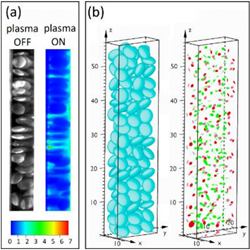
Cold plasma technologies are an efficient approach to improve the germination properties of seeds, especially in a stacking configuration within a dielectric barrier device. In such dry atmospheric plasma priming process, we show that a helium-nitrogen plasma treatment of 20 min can reduce the median germination time of lentil seeds from 1420 min to 1145 minutes, i.e. a gain in vigor of 275 min (or +19.4 %). Considering that this result depends on the plasma-seed interaction and therefore on the contact surfaces between the seeds and the plasma, a topographic modeling of a 100 seeds-stack is performed in the dielectric barrier device. This model drives to the distinction between the seed-seed contact surfaces (276 contacts standing for a total area of 230.6 mm2) and the seed-wall contact surfaces (134 contacts standing for a total area of 105.9 mm2). It turns out that after a single plasma treatment, the outer envelope of each seed is 92% exposed to plasma: a value high enough to support the relevance of the plasma process but which also opens the way to process optimizations. In this outlook, we propose to replace the single 20-minute plasma treatment by a “plasma sequence”, i.e. a succession of shorter plasma treatments whose total duration remains 20 minutes. Between two successive plasma treatments, the seeds can follow either a trapping procedure (seeds in same positions and orientations) or a randomizing procedure (seeds in same positions but reoriented) or a stirring procedure (seeds vigorously shaken). As an example, a sequence of 10 plasma treatments (upon 2 minutes) separated by short stirring procedures leads to a gain in vigor as high as 405 min (+28.5 %) vs 275 min (+19.4 %) for a single plasma treatment of 20 min. We propose to understand these results by correlating the gain in vigor with the water uptake of the seeds (increase from 29% to 55%) and the wettability state of their coating (decrease of contact angle from 113.5° to about 38°).

Sustainable improvement of seeds vigor using dry atmospheric plasma priming : Evidence through coating wettability, water uptake, and plasma reactive chemistry
– Authors : T. Dufour, Q. Gutierrez, C. Bailly
– References : Journal of Applied Physics, Vol. 129, 084902 (2021)
– Links : DOI, HAL (free download)
Abstract
Lentil seeds have been packed in a dielectric barrier device and exposed for several minutes to a cold atmospheric plasma generated in helium with/without a reactive gas (nitrogen or oxygen). While no impact is evidenced on germination rates (caping nearly at 100% with/without plasma exposure), seeds vigor is clearly improved with a median germination time decreasing from 1850 min (31h) to 1500 min (26 h), hence representing a time saving of at least 5 hours. We show that the admixture of nitrogen to helium can further increase this time saving up to 8 hours. Contrarily, we demonstrate that the addition of molecular oxygen to the helium discharge does not promote seeds vigor. Whatever the plasma chemistry utilized, these biological effects are accompanied with strong hydrophilization of the seed coating (with a decrease in contact angles from 118° to 25°) as well as increased water absorption (water uptakes measured 8 hours after imbibition are close to 50% for plasma-treated seeds instead of 37% for seeds from the control group). A follow-up of the seeds over a 45-days ageing period shows the sustainability of the plasma-triggered biological effects: whatever the plasma treatment, seeds vigor remains stable and much higher than for seeds unexposed to plasma). For these reasons, the seed-packed dielectric barrier device (SP-DBD) supplied with a He-N2 gas mixture can be considered as a relevant dry atmospheric priming plasma (DAPP) in the same way as those used in routine by seed companies.
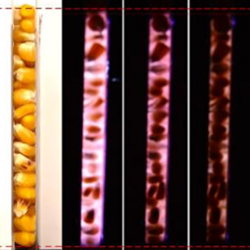
Seed-packed dielectric barrier device for plasma agriculture : understanding its electrical properties through an equivalent electrical model
– Authors : F. Judée, T. Dufour
– References : Journal of Applied Physics, Vol. 128, Issue 4, 2020
– Links : DOI, HAL (free download)
Abstract
Seeds have been packed in a dielectric barrier device where cold atmospheric plasma has been generated to improve their germinative properties. A special attention has been paid on understanding the resulting plasma electrical properties through an equivalent electrical model whose experimental validity has been demonstrated here. In this model, the interelectrode gap is subdivided into 4 types of elementary domains, according to whether they contain electric charges (or not) and according to their type of medium (gas, seed or insulator). The model enables to study the influence of seeds on the plasma electrical properties by measuring and deducing several parameters (charge per filament, gas capacitance, plasma power, …) either in no-bed configuration (i.e. no seed in the reactor) or in packed-bed configuration (seeds in the reactor). In that second case, we have investigated how seeds can influence the plasma electrical parameters considering six specimens of seeds (beans, radishes, corianders, lentils, sunflowers and corns). The influence of molecular oxygen (0-100 sccm) mixed with a continuous flow rate of helium (2 slm) is also investigated, especially through filaments breakdown voltages, charge per filament and plasma power. It is demonstrated that such bed-packing drives to an increase in the gas capacitance (ξOFF), to a decrease in the β– parameter and to variations of the filaments’ breakdown voltages in a seed-dependent manner. Finally, we show how the equivalent electrical model can be used to assess the total volume of the contact points, the capacitance of the seeds in the packed-bed configuration and we demonstrate that germinative effects can be induced by plasma on four of the six agronomical specimens.
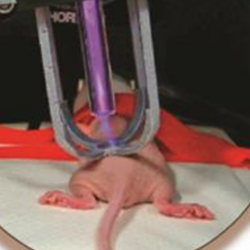
Cold atmospheric plasma induces tumor cell death in preclinical in vivo and in vitro models of human cholangiocarcinoma
– Authors : J. Vaquero, F. Judée, M. Vallette, H. Decauchy, A. Arbelaiz, L. Aoudjehane, O. Scatton, E. Gonzalez-Sanchez, F. Merabtene, J. Augustin, C. Housset, T. Dufour and Laura Fouassier
– References : Cancers, 12(5), 1280 (2020)
– Links : DOI, HAL (free download)
Abstract
Through the last decade, cold atmospheric plasma (CAP) has emerged as an innovative therapeutic option for cancer treatment. Recently, we have set up a potentially safe atmospheric pressure plasma jet device that displays antitumoral properties in a preclinical model of cholangiocarcinoma (CCA), a rare and very aggressive cancer emerging from the biliary tree with few efficient treatments. In the present study, we aimed at deciphering the molecular mechanisms underlying the antitumor effects of CAP towards CCA both in an in vivo and in vitro context. In vivo, using subcutaneous xenografts into immunocompromised mice, CAP treatment of CCA induced DNA lesions and tumor cell apoptosis, as evaluated by 8-oxoguanine and cleaved caspase-3 immunohistochemistry, respectively. Analysis of the tumor microenvironment showed changes in markers related to macrophage polarization. In vitro, incubation of CCA cells with CAP-treated culture media (i.e. plasma-activated media, PAM) led to a dose response decrease in cell survival. At molecular level, CAP treatment induced double-strand DNA breaks, followed by an increased phosphorylation and activation of the cell cycle master regulators CHK1 and p53, leading to cell cycle arrest and cell death by apoptosis. In conclusion, CAP is a novel therapeutic option to consider for CCA in the future.

Atmospheric pressure plasma jets applied to cancerology : correlating electrical configuration with in vivo toxicity and therapeutic efficiency
– Authors : F. Judée, J. Vaquero, L. Fouassier, S. Guegan, T. Dufour
– References : Journal of Physics D : Applied Physics, Vol. 52, Issue 24, 2019
– Links : DOI, HAL (free download)
Abstract
Two atmospheric pressure plasma jet (APPJ) devices—a plasma gun and a plasma Tesla jet—are compared in terms of safety and therapeutic efficiency to reduce the tumor volume progression of cholangiocarcinoma, i.e. a rare and very aggressive cancer emerging in biliary tree. For this, a three steps methodology is carried out. First, the two APPJ have been benchmarked in regard to their electrical and physico-chemical properties while interacting with material targets: dielectric plate, liquid sample, metal plate and an equivalent electrical circuit of human body. The propagation properties of the ionization wave interacting with these targets are discussed, in particular the profile of the related pulsed atmospheric plasma streams. In a second step, a dermal toxicity survey is performed so as to define an experimental operating window where plasma parameters can be changed without damaging healthy skin of mice during their exposure to plasma and without inducing any electrical hazards (burnings, ventricular fibrillation). Optimal conditions are identified discarding the conditions where slight alterations may be evidenced by histology (e.g. prenecrotic aspect of keratinocytes, alterations in the collagen structure). Hence, for the two APPJ plasma parameters these conditions are as follow: duty cycle = 14%, repetition frequency = 30 kHz, magnitude = 7 kV, gap = 10 mm and exposure time = 1 min. In a third step, the two plasma jets are utilized on cholangiocarcinoma xenograft tumor model developed in immunodeficient mice. The two devices are safe and a significant therapeutic efficiency is demonstrated with the plasma Tesla. In conclusion, we have developed a safe cold atmospheric plasma device with antitumoral properties in preclinical model of cholangiocarcinoma, opening the path for new anticancer treatment opportunities.
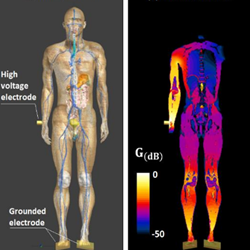
Plasma gun for medical applications : engineering an equivalent electrical target of human body and deciphering relevant electrical parameters
– Authors : F. Judée, T. Dufour
– References : Journal of Physics D : Applied Physics, Letter, Vol. 52, Issue 16, 2019
– Links : DOI, HAL (free download)
Abstract
Simulations and experimental works have been carried out in a complementary way to engineer a basic material target mimicking the same dielectric properties of the human body. It includes a resistor in parallel with a capacitor, whose values (Rh=1500 Ω and Ch=100 pF) are estimated in regard of parameters commonly utilized upon in vivo campaigns (frequency=30 kHz, gap=10 mm, high voltage electrode surface=12.6 mm2). This equivalent electrical human body (EEHB) circuit can be used as a reference and realistic target to calibrate electrical properties of therapeutic plasma sources before their utilization on patients. In this letter, we consider a configuration where this EEHB target interacts with a plasma gun (PG). Plasma power measurements performed in such configuration clearly indicate two operating modes depending on the value of the supplied voltage. Hence, the plasma gun generates pulsed atmospheric plasma streams likely to present therapeutic interest for voltages comprised between 3.0 and 8.5 kV while for higher values, transient arcs of thermal plasma are generated and represent substantial risks for the patient.

Self-organized patterns by a DC pin liquid anode discharge in ambient air : effect of liquid types on formation
– Authors : S. Zhang, T. Dufour
– References : Physics of Plasmas 25, 073502 (2018)
– Links : DOI, HAL (free download)
Abstract
A pin liquid anode DC discharge is generated in open air without any additional gas feeding to form self-organized patterns (SOPs) on various liquid interfaces. Axially resolved emission spectra of the whole discharge reveal that the self-organized patterns are formed below a dark region and are visible mainly due to the N2 (C3 PI-B3 PI) transitions. The high energy N2 (C) level is mainly excited by the impact of electrons heated by the local increased electric field at the interface. For the first time, the effect of the liquid type on the SOP formation is presented. With almost the same other discharge conditions, the formed SOPs are significantly different from HCl and H2SO4 liquid anodes. The SOP difference is repeated when the discharge current and gap distance change for both liquid anodes. The variations of SOP size and discretization as a function of discharge current and gap distance are discussed and confirm that different SOPs are formed by the HCl liquid anode from tap water or the H2SO4 liquid anode. A possible explanation is brought up to explain the dependence of SOPs on the liquid type.

Plasma-activation of tap water using DBD for agronomy applications : identification and quantification of long lifetime chemical species and production/consumption mechanisms
– Authors : F. Judée, S. Simon, C. Bailly, T. Dufour
– References : Water Research 133 (2018) 47-59
– Links : DOI, HAL (free download)
Abstract
Cold atmospheric plasmas are weakly ionized gases that can be generated in ambient air. They produce energetic species (e.g. electrons, metastables) as well as reactive oxygen species, reactive nitrogen species, UV radiations and local electric field. Their interaction with a liquid such as tap water can hence change its chemical composition. The resulting “plasma-activated liquid” can meet many applications, including medicine and agriculture. Consequently, a complete experimental set of analytical techniques dedicated to the characterization of long lifetime chemical species has been implemented to characterize tap water treated using cold atmospheric plasma process and intended to agronomy applications. For that purpose, colorimetry and acid titrations are performed, considering acid-base equilibria, pH and temperature variations induced during plasma activation. 16 species are quantified and monitored: hydroxide and hydronium ions, ammonia and ammonium ions, orthophosphates, carbonate ions, nitrite and nitrate ions and hydrogen peroxide. The related consumption/production mechanisms are discussed. In parallel, a chemical model of electrical conductivity based on Kohlrausch’s law has been developed to simulate the electrical conductivity of the plasma-activated tap water (PATW). Comparing its predictions with experimental measurements leads to a narrow fitting, hence supporting the self-sufficiency of the experimental set, i.e. the fact that all long lifetime radicals of interest present in PATW are characterized. Finally, to evaluate the potential of cold atmospheric plasmas for agriculture applications, tap water has been daily plasma-treated to irrigate lentils seeds. Then, seedlings lengths have been measured and compared with untreated tap water, showing an increase as high as 34.0% and 128.4% after 3 days and 6 days of activation respectively. The interaction mechanisms between plasma and tap water are discussed as well as their positive synergy on agronomic results.
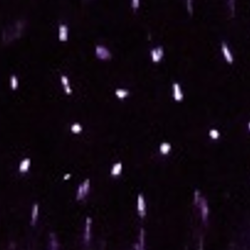
DBD in burst mode : solution for more efficient CO2 conversion ?
– Authors : A. Ozkan, T. Dufour*, T. Silva, N. Britun, R. Snyders, F. Reniers, A. Bogaerts
– References : Plasma Sources Science & Technology, 2016, Vol. 25, No 5, 055005
– Links : DOI, HAL (free download)
Abstract
CO2 conversion into value-added products has gained significant interest over the few last years, as the greenhouse gas concentrations constantly increase due to anthropogenic activities. Here we report on experiments for CO2 conversion by means of a cold atmospheric plasma using a cylindrical flowing dielectric barrier discharge (DBD) reactor. A detailed comparison of this DBD ignited in a so-called burst mode (i.e. where an AC voltage is applied during a limited amount of time) and pure AC mode is carried out to evaluate their effect on the conversion of CO2 as well as on the energy efficiency. Decreasing the duty cycle in the burst mode from 100% (i.e. corresponding to pure AC mode) to 40% leads to a rise in the conversion from 16–26% and to a rise in the energy efficiency from 15 to 23%. Based on a detailed electrical analysis, we show that the conversion correlates with the features of the microfilaments. Moreover, the root-mean-square voltage in the burst mode remains constant as a function of the process time for the duty cycles <70%, while a higher duty cycle or the usual pure AC mode leads to a clear voltage decay by more than 500 V, over approximately 90 s, before reaching a steady state regime. The higher plasma voltage in the burst mode yields a higher electric field. This causes the increasing the electron energy, and therefore their involvement in the CO2 dissociation process, which is an additional explanation for the higher CO2 conversion and energy efficiency in the burst mode.

How do the barrier thickness and dielectric material influence the filamentary mode and CO2 conversion in a flowing DBD ?
– Authors : A. Ozkan, T. Dufour*, A. Bogaerts, F. Reniers
– References : Plasma Sources Science & Technology, 2016, Vol. 25, No 4, 045016
– Links : DOI, HAL (free download)
Abstract
Dielectric barrier discharges (DBDs) are commonly used to generate cold plasmas at atmospheric pressure. Whatever their configuration (tubular or planar), the presence of a dielectric barrier is mandatory to prevent too much charge build up in the plasma and the formation of a thermal arc. In this article, the role of the barrier thickness (2.0, 2.4 and 2.8 mm) and of the kind of dielectric material (alumina, mullite, Pyrex, quartz) is investigated on the filamentary behavior in the plasma and on the CO2 conversion in a tubular flowing DBD, by means of mass spectrometry measurements correlated with electrical characterization and IR imaging. Increasing the barrier thickness decreases the capacitance, while preserving the electrical charge. As a result, the voltage over the dielectric increases and a larger number of microdischarges is generated, which enhances the CO2 conversion. Furthermore, changing the dielectric material of the barrier, while keeping the same geometry and dimensions, also affects the CO2 conversion. The highest CO2 conversion and energy efficiency are obtained for quartz and alumina, thus not following the trend of the relative permittivity. From the electrical characterization, we clearly demonstrate that the most important parameters are the somewhat higher effective plasma voltage (yielding a somewhat higher electric field and electron energy in the plasma) for quartz, as well as the higher plasma current (and thus larger electron density) and the larger number of microdischarge filaments (mainly for alumina, but also for quartz). The latter could be correlated to the higher surface roughness for alumina and to the higher voltage over the dielectric for quartz.

Reactivity of water vapor in an atmospheric argon flowing post-discharge
– Authors : S. Collette, T. Dufour, F. Reniers
– References : Plasma Sources Science & Technology, 2016, Vol. 25, No 2, 025014
– Links : DOI, HAL (free download)
Abstract
The reactivity of water vapor introduced in the flowing post-discharge of an RF atmospheric plasma torch is investigated through electrical characterization, optical emission spectroscopy and mass spectrometry measurements. Due to the technical features of the plasma torch, the post-discharge can be considered as divided into two regions: an inner region (inside the plasma torch device) where the water vapor is injected and an outer region which directly interacts with the ambient air. The main reactions induced by the injection of water vapor are identified as well as those indicative of the influence of the ambient air. Plausible pathways allowing the production of H, OH, O radicals and H2O2 are discussed as well as reactions potentially responsible for inhomogeneities and for a low DC current measured in the flowing post-discharge.
The influence of power and frequency on the filamentary behavior of a flowing DBD – Application to the splitting of CO2
– Authors : A. Ozkan, T. Dufour, T. Silva, N. Britun, R. Snyders, A. Bogaerts, F. Reniers
– References : Plasma Sources Science & Technology, 2016, Vol. 25, No 2, 025013
– Links : DOI, HAL (free download)
Abstract
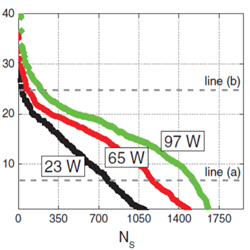
In this experimental study, a flowing dielectric barrier discharge operating at atmospheric pressure is used for the splitting of CO2 into O2 and CO. The influence of the applied frequency and plasma power on the microdischarge properties is investigated to understand their role on the CO2 conversion. Electrical measurements are carried out to explain the conversion trends and to characterize the microdischarges through their number, their lifetime, their intensity and the induced electrical charge. Their influence on the gas and electrode temperatures is also evidenced through optical emission spectroscopy and infrared imaging. It is shown that, in our configuration, the conversion depends mostly on the charge delivered in the plasma and not on the effective plasma voltage when the applied power is modified. Similarly, at constant total current, a better conversion is observed at low frequencies, where a less filamentary discharge regime with a higher effective plasma voltage than that at a higher frequency is obtained.
Fuel cell electrodes from organometallic platinum precursors : an easy atmospheric plasma approach
– Authors : D. Merche, T. Dufour, J. Banneton, G. Caldarella, V. Debaille, N. Job, F. Reniers
– References : Plasma processes and polymers, 2016, Vol. 13, Issue 1, 91-104
– Links : DOI, HAL (free download)
Abstract
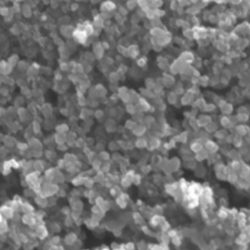
An organometallic powder (platinum (II) acetylacetonate) is decomposed in the post- discharge of an atmospheric RF plasma torch to deposit Pt nanoparticles on carbon black supports. The resulting nanohybrid materials are characterized by FEG-SEM and XPS techniques to highlight their high content in Pt, their oxidation degree, and the dispersion of the Pt nanoparticles on the substrate. ICP-MS and electrochemical characterizations in a single fuel cell (cyclic voltammetry, dynamic polarization curves) are also performed on electrodes realized by treating the powder mixture overlaid on gas diffusion layers. The comparison of the catalytic activity and the Pt loading with commercially available electrodes shows the great potential of this simple innovative, fast, and robust deposition method.

Synthesis and texturization processes of (super)-hydrophobic fluorinated surfaces by atmospheric plasma
– Authors : J. Hubert, J. Mertens, T. Dufour, N. Vandencasteele, F. Reniers, P. Viville, R. Lazzaroni, M. Raes, H. Terryn
– References : Journal of Materials Research, 2015, Vol. 30, Issue 21, 3177-3191
– Links : DOI, HAL (free download)
Abstract
The synthesis and texturization processes of fluorinated surfaces by means of atmospheric plasma are investigated and presented through an integrated study of both the plasma phase and the resulting material surface. Three methods enhancing the surface hydrophobicity up to the production of super-hydrophobic surfaces are evaluated: (i) the modification of a polytetrafluoroethylene (PTFE) surface, (ii) the plasma deposition of fluorinated coatings and (iii) the incorporation of nanoparticles into those fluorinated films. In all the approaches, the nature of the plasma gas appears to be a crucial parameter for the desired property. Although a higher etching of the PTFE surface can be obtained with a pure helium plasma, the texturization can only be created if O2 is added to the plasma, which simultaneously decreases the total etching. The deposition of CxFy films by a dielectric barrier discharge leads to hydrophobic coatings with water contact angles (WCAs) of 115°, but only the filamentary argon discharge induces higher WCAs. Finally, nanoparticles were deposited under the fluorinated layer to increase the surface roughness and therefore produce super-hydrophobic hybrid coatings characterized by the nonadherence of the water droplet at the surface.

Chemical and physical effects of the carrier gas on the atmospheric pressure PECVD of fluorinated precursors
– Authors : J. Hubert, N. Vandencasteele, J. Mertens, P. Viville, T. Dufour, C. Barroo, T. Visart de Bocarmé, R. Lazzaroni, F. Reniers
– References : Plasma Processes & Polymers, 2015, Vol. 12, Issue 10, 1174-1185
– Links : DOI, HAL (free download)
Abstract
The atmospheric pressure PECVD deposition and texturization of hydrophobic coatings using liquid fluorinated C6F12 and C6F14 precursors are investigated. The effect of the carrier gas (argon and helium) is discussed in terms of the behavior of the gas phase and of the characteristics of the deposited film. Mass spectrometry measurements indicate that the fragmentation is higher with argon while helium reacts very easily with oxygen impurities leading to the formation of CxFyOz compounds. These observations are consistent with the chemical composition of the films determined by XPS and the variation in the deposition rate. Moreover, the streamers present in the argon discharge affect the morphology of the surface by increasing the roughness, which leads to the increase in the hydrophobicity of the coatings
CO2-CH4 conversion and syngas formation at atmospheric pressure using a multi-electrode dielectric barrier discharge
– Authors : A. Ozkan, T. Dufour, G. Arnoult, P. de Keyzer, A. Bogaerts, F. Reniers
– References : Journal of CO2 utilization, 2015, Vol. 9, 74-81
– Links : DOI, HAL (free download)
Abstract
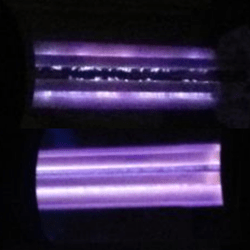
The conversion of CO2 and CH4 into value-added chemicals is studied in a new geometry of a dielectric barrier discharge (DBD) with multi-electrodes, dedicated to the treatment of high gas flow rates. Gas chromatography is used to define the CO2 and CH4 conversion as well as the yields of the products of decomposition (CO, O2 and H2) and of recombination (C2H4, C2H6 and CH2O). The influence of three parameters is investigated on the conversion: the CO2 and CH4 flow rates, the plasma power and the nature of the carrier gas (argon or helium). The energy efficiency of the CO2 conversion is estimated and compared with those of similar atmospheric plasma sources. Our DBD reactor shows a good compromise between a good energy efficiency and the treatment of a large CO2 flow rate.

LDPE surface modifications induced by atmospheric plasma torches with linear and showerhead configurations
– Authors : S. Abou Rich, T. Dufour, P. Leroy, L. Nittler, J.-J. Pireaux, F. Reniers
– References : Plasma Processes & Polymers, 2015, Vol. 12, Issue 8, 771-785
– Links : DOI, HAL (free download)
Abstract
Low density polyethylene (LDPE) surfaces have been plasma-modified to improve their nanostructural and wettability properties. These modifications can significantly improve the deposition of subsequent layers such as films with specific barrier properties. For this purpose, we compare the treatments induced by two atmospheric plasma torches with different configurations (showerhead vs linear). The modifications of LDPE films in terms of chemical surface composition and surface morphology are evidenced by X-ray photoelectron spectroscopy, water contact angles measurements and atomic force microscopy. A comparison between the two post-discharge treatments is achieved for several torch-to-substrate distances (gaps), treatment times and oxygen flow rates in terms of etching rate, roughening rate, diffusion of oxygen into the subsurface and hydrophilicity. By correlating these results with the chemical composition of the post-discharges, we identify and compare the species which are responsible for the chemical surface functionalization, the surface roughening and etching.

Understanding polyethylene surface functionalization by an atmospheric He/O2 plasma through combined experiments and simulations
– Authors : T. Dufour, J. Minnebo, S. Abou Rich, E. C. Neyts, A. Bogaerts, F. Reniers
– References : J. Phys. D : Appl. Phys., 2014, Vol. 47, Issue 22, 224007 (12 pp)
– Links : DOI, HAL (free download)
Abstract
High density polyethylene surfaces were exposed to the atmospheric post-discharge of a radiofrequency plasma torch supplied in helium and oxygen. Dynamic water contact angle measurements were performed to evaluate changes in surface hydrophilicity and angle resolved X-ray photoelectron spectroscopy was carried out to identify the functional groups responsible for wettability changes and to study their subsurface depth profiles, up to 9 nm in depth. The reactions leading to the formation of C–O, C=O and O–C=O groups were simulated by molecular dynamics. These simulations demonstrate that impinging oxygen atoms do not react immediately upon impact but rather remain at or close to the surface before eventually reacting. The simulations also explain the release of gaseous species in the ambient environment as well as the ejection of low molecular weight oxidized materials from the surface.

Effect of cationic and anionic surfactants on application of calcium carbonate nanoparticles in paper coating
– Authors : A. Barhoum, H. Rahier, R. Abouzeid, M. Rehan, T. Dufour, G. Hill, F. Reniers, A. Dufresne
– References : ACS Appl. Mater. Interfaces, 2014, Vol. 6, Issue 4, 2734-2744
– Links : DOI HAL (free download)
Abstract
Modification of calcium carbonate particles with surfactant significantly improves the properties of the calcium carbonate coating on paper. In this study, unmodified and CTAB (hexadecyltetramethylammonium bromide)- and oleate-modified calcium carbonate nanoparticles were prepared using the wet carbonation technique for paper coating. CTAB (cationic surfactant) and sodium oleate (anionic surfactant) were used to modify the size, morphology, and surface properties of the precipitated nanoparticles. The obtained particles were characterized using X-ray diffraction (XRD), Fourier transform infrared (FT-IR) spectroscopy, zeta potential measurements, thermal gravimetric analysis (TGA), and transmission electron microscopy (TEM). Coating colors were formulated from the prepared unmodified and modified calcium carbonates and examined by creating a thin coating layer on reference paper. The effect of calcium carbonate particle size and surface modification on paper properties, such as coating thickness, coating weight, surface roughness, air permeability, brightness, whiteness, opacity, and hydrophobicity, were investigated and compared with commercial ground (GCC) calcium carbonate-coated papers. The results show that the obtained calcium carbonate nanoparticles are in the calcite phase. The morphology of the prepared calcium carbonate nanoparticles is rhombohedral, and the average particle diameter is less than 100 nm. Compared to commercial GCC, the use of unmodified and CTAB- and oleate-modified calcium carbonate nanoparticles in paper coating improves the properties of paper. The highest measured paper properties were observed for paper coated with oleate-modifed nanoparticles, where an increase in smoothness (decrease in paper roughness) (+23 %), brightness (+1.3 %), whiteness (+2.8 %), and opacity (+2.3 %) and a decrease in air permeability (-26 %) was obtained with 25% less coat weight. The water contact angle at a drop age time of 10 min was about 112° for the paper coated with oleate-modified nanoparticles and 42° for paper coated with CTAB-modified nanoparticles compared to 104° for GCC-coated paper.

In-depth diffusion of oxygen into LDPE exposed to an Ar-O2 atmospheric post-discharge : a complementary approach between ARXPS and Tof-SIMS
– Authors : S. Abou Rich, P. Leroy, T. Dufour, N. Wehbe, L. Houssiau, F. Reniers
– References : Surf. Interface Anal., 2014, Vol.46, Issue 3, 164-174
– Links : DOI, HAL (free download)
Abstract
The in-depth oxygen diffusion into a low density polyethylene film is performed in the post-discharge of an atmospheric plasma torch, supplied in argon as carrier gas and with or without oxygen as reactive gas. The chemical and structural properties of the polymer surface and bulk are studied in terms of plasma parameters (treatment time, power, and reactive gas flow rate). A good correlation between XPS and Fourier transform infrared spectroscopy analyses is demonstrated. The penetration depth of oxygen into the bulk of the polymer is investigated by angle resolved-XPS and time-of-flight SIMS. It is shown that, depending on the plasma conditions, oxygen could penetrate up to 20-40nm into the low density polyethylene during the atmospheric plasma treatment.
LDPE films treated by an atmospheric Ar-O2 post-discharge : functionalization, etching, degradation and partial recovery of the native wettability state
– Authors : S. Abou Rich, T. Dufour, P. Leroy, L. Nittler, J.-J. Pireaux, F. Reniers
– References : J. Phys. D : Appl. Phys., 2014, Vol. 47, Issue 6, 065203
– Links : DOI, HAL (free download)
Abstract
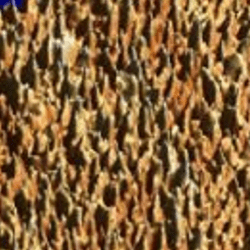
To optimize the adhesion of layers presenting strong barrier properties on low-density polyethylene (LDPE) surfaces, we investigated the influence of argon and argon-oxygen atmospheric pressure post-discharges. This study was performed using X-ray photoelectron spectroscopy, atomic force microscopy, optical emission spectroscopy (OES) and dynamic water contact angle (WCA) measurements. After the plasma treatment, a slight increase in the roughness was emphasized, more particularly for the samples treated in a post-discharge supplied in oxygen. Measurements of the surface roughness and of the oxygen surface concentration suggested the competition of two processes playing a role on the surface hydrophilicity and occurring during the post-discharge treatment: the etching and the activation of the surface. The etching rate was estimated to about 2.7 nm.s−1 and 5.8 nm.s−1 for Ar and Ar-O2 post-discharges, respectively. The mechanisms underlying this etching were investigated through experiments, in which we discuss the influence of the O2 flow rate and the distance (gap) separating the plasma torch from the LDPE surface located downstream. O atoms and NO molecules (emitting in the UV range) detected by OES seem to be good candidates to explain the etching process. An ageing study is also presented to evidence the stability of the treated surfaces over 60 days. After 60 days of storage, we showed that whatever the O2 flow rate, the treated films registered a loss of their hydrophilic state since their WCA increased towards a common threshold of 80°. This ‘hydrophobic recovery’ effect was mostly attributed to the reorientation of induced polar chemical groups into the bulk of the material. Indeed, the relative concentrations of the carbonyl and carboxyl groups at the surface decreased with the storage time and seemed to reach a plateau after 30 days.
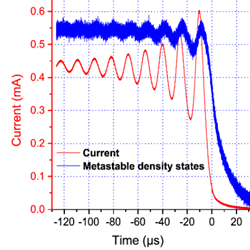
Ignition and extinction phenomena in helium micro-hollow cathode discharges
– Authors : M. K. Kulsreshath, N. Sadeghi, L. Schwaederle, T. Dufour, L. J. Overzet, P. Lefaucheux, R. Dussart
– References : J. Appl. Phys., 2013, Vol. 114, 243303 (8 pp)
– Links : DOI, HAL (free download)
Abstract
Micro hollow cathode discharges (MHCD) were produced using 250 μm thick dielectric layer of alumina sandwiched between two nickel electrodes of 8 μm thickness. A through cavity at the center of the chip was formed by laser drilling technique. MHCD with a diameter of few hundreds of micrometers allowed us to generate direct current discharges in helium at up to atmospheric pressure. A slowly varying ramped voltage generator was used to study the ignition and the extinction periods of the micro-discharges. The analysis was performed by using electrical characterization of the V-I behavior and the measurement of He(3S1) metastable atoms density by tunable diode laser spectroscopy. At the ignition of the micro-discharges, 2 μs long current peak as high as 24 mA was observed, sometimes followed by low amplitude damped oscillations. At helium pressure above 400 Torr, an oscillatory behavior of the discharge current was observed just before the extinction of the micro-discharges. The same type of instability in the extinction period at high pressure also appeared on the density of He(3S1) metastable atoms but delayed by a few μs relative to the current oscillations. Metastable atoms thus cannot be at the origin of the generation of the observed instabilities.

Competitive and synergistic effects between excimer VUV radiation and O radicals on the etching mechanisms of polyethylene and fluoropolymer surfaces treated by an atmospheric He-O2 post-discharge
– Authors : T. Dufour, J. Hubert, N. Vandencasteele, P. Viville, R. Lazzaroni, F. Reniers
– References : J. Phys. D : Appl. Phys., 2013, Vol. 46, Issue 31, 315203 (14 pp)
– Links : DOI, HAL (free download)
Abstract
Among various surface modification techniques, plasma can be used as a source for tailoring the surface properties of diverse materials. HDPE and fluoropolymer surfaces have been treated by the post-discharge of an atmospheric RF-plasma torch supplied with helium and oxygen gases. The plasma-treated surfaces were characterized by measurements of mass losses, water contact angles, x-ray photoelectron spectroscopy and atomic force microscopy. This experimental approach correlated with an optical characterization of the plasma phase allowed us to propose etching mechanisms occurring at the post-discharge/polymer interface. We discuss how competitive and synergistic effects can result from the oxidation and/or the roughening of the surface but also from the excimer VUV radiation, the He metastable species and the O radicals reaching the plasma-polymer interface.

Influence of ambient air on the flowing afterglow of an atmospheric pressure Ar/O2 radiofrequency plasma
– Authors : C. Y. Duluard, T. Dufour, J. Hubert, F. Reniers
– References : J. Appl. Phys., 2013, Vol. 113, Issue 9, 093303 (12 pp)
– Links : DOI, HAL (free download)
Abstract
The influence of ambient air on the flowing afterglow of an atmospheric pressure Ar/O2 radiofrequency plasma has been investigated experimentally. Spatially resolved mass spectrometry and laser induced fluorescence on OH radicals were used to estimate the intrusion of air in between the plasma torch and the substrate as a function of the torch-to-substrate separation distance. No air is detected, within the limits of measurement uncertainties, for separation distances smaller than 5 mm. For larger distances, the effect of ambient air can no longer be neglected, and radial gradients in the concentrations of species appear. The Ar 4p population, determined through absolute optical emission spectroscopy, is seen to decrease with separation distance, whereas a rise in emission from the N2(C–B) system is measured. The observed decay in Ar 4p and N2(C) populations for separation distances greater than 9 mm is partly assigned to the increasing collisional quenching rate by N2 and O2 molecules from the entrained air. Absorption measurements also point to the formation of ozone at concentrations from 1014 to 1015 cm–3, depending both on the injected O2 flow rate and the torch-to-substrate separation distance.

Chemical mechanisms inducing a DC current measured in the flowing post-discharge of an RF He-O2 plasma torch
– Authors : T. Dufour, J. Hubert, N. Vandencasteele, F. Reniers
– References : Plasma Sources Science & Technology, 2012, Vol. 21, Issue 4, 045013 (10 pp)
– Links : DOI, HAL (free download)
Abstract
The post-discharge of an RF plasma torch supplied with helium and oxygen gases is characterized by mass spectrometry, optical emission spectroscopy and electrical measurements. We have proved the existence of a dc current in the post-discharge (1–20μA), attributed to the Penning ionization of atmospheric nitrogen and oxygenated species. The mechanisms ruling this dc current are investigated through experiments in which we discuss the influence of the O2 flow rate, the He flow rate and the distance separating the plasma torch from a material surface located downstream.

PTFE surface etching in the afterglow of a scanning RF plasma torch : evidence of ejected fluorinated species
– Authors : T. Dufour, J. Hubert, P. Viville, C. Duluard, S. Desbief, R. Lazzaroni, F. Reniers
– References : Plasma Processes and Polymers, 2012, Vol. 9, Issue 8, 820-829
– Links : DOI, HAL (free download)
Abstract
The texturization of poly(tetrafluoroethylene) (PTFE) surfaces is achieved at atmospheric pressure by using the post-discharge of a radio-frequency plasma torch supplied in helium and oxygen gases. The surface properties are characterized by contact angle measurement, X-ray photoelectron spectroscopy and atomic force microscopy. We show that the plasma treatment increases the surface hydrophobicity (with water contact angles increasing from 115° to 155°) only by modifying the PTFE surface morphology and not the stoichiometry. Measurements of sample mass losses correlated to the ejection of CF2 fragments from the PTFE surface evidenced an etching mechanism at atmospheric pressure.

Etching processes of polytetrafluoroethylene surfaces exposed to He and He-O2 atmospheric post-discharges
– Authors : J. Hubert, T. Dufour, N. Vandencasteele, S. Desbief, R. Lazzaroni, F. Reniers
– References : Langmuir, 2012, Vol. 28, Issue 25, 9466-9474
– Links : DOI, HAL (free download)
Abstract
A comparative study of polytetrafluoroethylene (PTFE) surfaces treated by the post-discharge of He and He-O2 plasmas at atmospheric pressure is presented. The characterization of treated PTFE surfaces and the species involved in the surface modification are related. In pure He plasmas, no significant change of the surface has been observed by X-ray photoelectron spectroscopy (XPS), dynamic water contact angles (dWCA) and atomic force microscopy (AFM), in spite of important mass losses recorded. According to these observations, a layer-by-layer physical etching without any preferential orientation is proposed, where the highly energetic helium metastables are the main species responsible for the scission of −(CF2)n− chains. In He-O2 plasmas, as the density of helium metastables decreases as a function of the oxygen flow rate, the treatment leads to fewer species ejected from the PTFE surfaces (in agreement with mass loss measurements and the detection of fluorinated species onto aluminum foil). However, the dWCA and AFM measurements show an increase in the hydrophobicity and the roughness of the surface. The observed alveolar structures are assumed to be caused by an anisotropic etching where the oxygen atoms etch mainly the amorphous
phase.

Synthesis of Membrane-Electrode Assembly for Fuel Cells by Means of (Sub)-Atmospheric Plasma Processes
– Authors : D. Merche, T. Dufour, J. Hubert, C. Poleunis, S. Yunus, A. Delcorte, P. Bertrand, F. Reniers
– References : Plasma Processes & Polymers, 2012, Vol. 9, Issue 11-12, 1144-1153
– Links : DOI, HAL (free download)
Abstract
An easy procedure to build up membrane-electrode assemblies for applications dedicated to miniaturized PEMFC using H2 or CH3OH by a two-steps atmospheric plasma process is reported. Firstly, catalyst nanoparticles are grafted on carbon substrates by spraying a Pt colloidal solution in the post-discharge of an RF atmospheric plasma torch. In the second step, the resulting decorated electrodes are covered by plasma synthesized polymeric membranes in the discharge of a DBD. The sulfonated polystyrene membranes are synthesized by injecting simultaneously styrene and trifluoromethanesulfonic acid monomers, in the presence of a carrier gas (Ar or He). The membranes are chemically characterized by XPS, ToF-SIMS, and FTIR (IRRAS) and their deposition rate is investigated by SEM.

Gas sensing properties of multiwall carbon nanotubes decorated with rhodium nanoparticles
– Authors : R. Leghrib, T. Dufour, F. Demoisson, N. Claessens, F. Reniers, E. Llobet
– References : Sensors and actuators B : Chemical, 2011, Vol. 160, Issue 1, 974-980
– Links : DOI, HAL (free download)
Abstract
In the present work, multiwalled carbon nanotubes were decorated with rhodium nanoparticles using a colloidal solution in the post-discharge of an RF atmospheric plasma of argon (Ar) or argon/oxygen (Ar:O2). The properties of these hybrid materials towards the room temperature detection of NO2, C2H4, CO, C6H6 and moisture were investigated and discussed in view of compositional and morphological studies. It was found that the presence of oxygen in the plasma treatment is essential to significantly enhance the gas response of Rh-decorated multiwalled carbon nanotubes and to avoid response saturation even at low gas/vapor concentrations. These desirable effects are attributed to the presence of oxygen during the CNT plasma treatment since oxygenated vacancies act both as active adsorption sites for gases and as anchoring sites for Rh nanoparticles (the presence of Rh nanoclusters is nearly doubled in Ar:O2 treated samples as compared to Ar treated samples). The oxygen treatment also makes easier the charge transfer between Rh nanoparticles and carbon nanotubes upon gas adsorption. The method for treating and decorating multiwalled carbon nanotubes used here is simple, fast and scalable for producing gas sensitive nanohybrid materials with uniform and well-controlled properties.
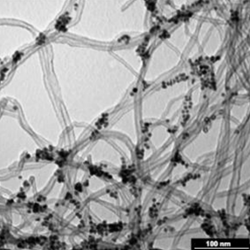
Carbon nanotubes decorated with Au, Pt and Rh clusters by injection of colloidal solutions into the post-discharge of an RF atmospheric plasma
– Authors : N. Claessens, F. Demoisson, T. Dufour, A. Mansour, A. Felten, J. Guillot, J-J Pireaux, F Reniers
– References : Nanotechnology, 2010, Vol. 21, Issue 38, 385603
– Links : DOI, HAL (free download)
Abstract
In this paper, we present a new, simple, robust and efficient technique to decorate multi-wall carbon nanotubes (MWCNT) with metal nanoparticles. As case studies, Au, Pt and Rh nanoparticles are grafted onto MWCNTs by spraying a colloidal solution into the post-discharge of an atmospheric argon or argon/oxygen RF plasma. The method that we introduce here is different from those usually described in the literature, since the treatment is operated at atmospheric pressure, allowing the realization in only one step of the surface activation and the deposition processes. We demonstrate experimentally that the addition of oxygen gas in the plasma increases significantly the amount of grafted metal nanoparticles. Moreover, TEM pictures clearly show that the grafted nanoparticles are well controlled in size.

Integrated micro-plasmas in silicon operating in helium
– Authors : R. Dussart, L.J. Overzet, P. Lefaucheux, T. Dufour, M. Kulsreshath, P. Ranson, J.B. Lee, M. Goeckner
– References : The European Physical Journal D, 2010, Vol. 60, Issue 3, 601-608
– Links : DOI, HAL (free download)
Abstract
Microplasma arrays operating in helium in a DC regime have been produced in silicon microreactors. Cathode boundary layer (CBL) type microdevices were elaborated using clean room facilities and semiconductor processing techniques. Ignition of the micro-discharge arrays having either 50 or 100 μm diameter cavities was studied. Two different structures (isotropically etched or anisotropically etched cavity) and various conditions (the two different voltage polarities, pressures etc.) were investigated. 100 microdischarges of 50 μm diameter could be ignited in parallel at 1000 Torr. At high current, some parasitic and transient sparks appeared at the edge of the sample. When the polarization was reversed (cathode side corresponding the opened electrode), more current was needed to light all the microdischarges. A thermally affected zone around the hole on the anode side was obtained after operation.

Experimental study and simulation of a micro-discharge with limited cathode area
– Authors : T. Dufour, L.J. Overzet, R. Dussart, L.C. Pitchford, N. Sadeghi, P. Lefaucheux, M. Kulsreshath, P. Ranson
– References : The European Physical Journal D, 2010, Vol. 60, Issue 3, 565-574
– Links : DOI, HAL (free download)
Abstract
We report in this paper simulation results and experimental measurements to characterize a micro-discharge generated in a single micro cavity device operating in helium. By spatially limiting the cathode surface area using a dielectric layer, we demonstrate the ability of the micro-discharge to work in a steady-state abnormal glow regime. The physical properties of this regime are discussed.

RF impedance measurements of DC atmospheric micro-discharges
– Authors : L.J. Overzet, D. Jung, M.A. Mandra, M. Goeckner, T. Dufour, R. Dussart, P. Lefaucheux
– References : The European Physical Journal D, 2010, Vol. 60, Issue 3, 449-454
– Links : DOI, HAL (free download)
Abstract
The available diagnostics for atmospheric micro-plasmas remain limited and relatively complex to implement; so we present a radio-frequency technique for diagnosing a key parameter here. The technique allows one to estimate the dependencies of the electron density by measuring the RF-impedance of the micro-plasma and analyzing it with an appropriate equivalent circuit. This technique is inexpensive, can be used in real time and gives reasonable results for argon and helium DC micro-plasmas in holes over a wide pressure range. The electron density increases linearly with current in the expected range consistent with normal glow discharge behavior.

Effect of limiting the cathode surface on DC micro-hollow cathode discharge in helium
– Authors : T. Dufour, R. Dussart, P. Lefaucheux, P. Ranson, L. Overzet, M. Mandra, J.-B. Lee, M. Goeckner
– References : Applied Physics Letters, 2008, Vol. 93, Issue 7, 071508,
– Links : DOI, HAL (free download)
Abstract
This paper describes how to light several microdischarges in parallel without having to individually ballast each one. The V-I curve of a microhollow cathode discharge is characterized by a constant voltage in the normal glow regime because the plasma is able to spread over the cathode surface area to provide the additional secondary electrons needed. If one limits the cathode surface area, the V-I characteristic can be forced into an abnormal glow regime in which the operating voltage must increase with the current. It is then possible to light several microdischarges mounted in parallel without ballasting them individually.
 Thierry Dufour, Dr. - Academic research